
Electrical Work in Upper Arlington, OH
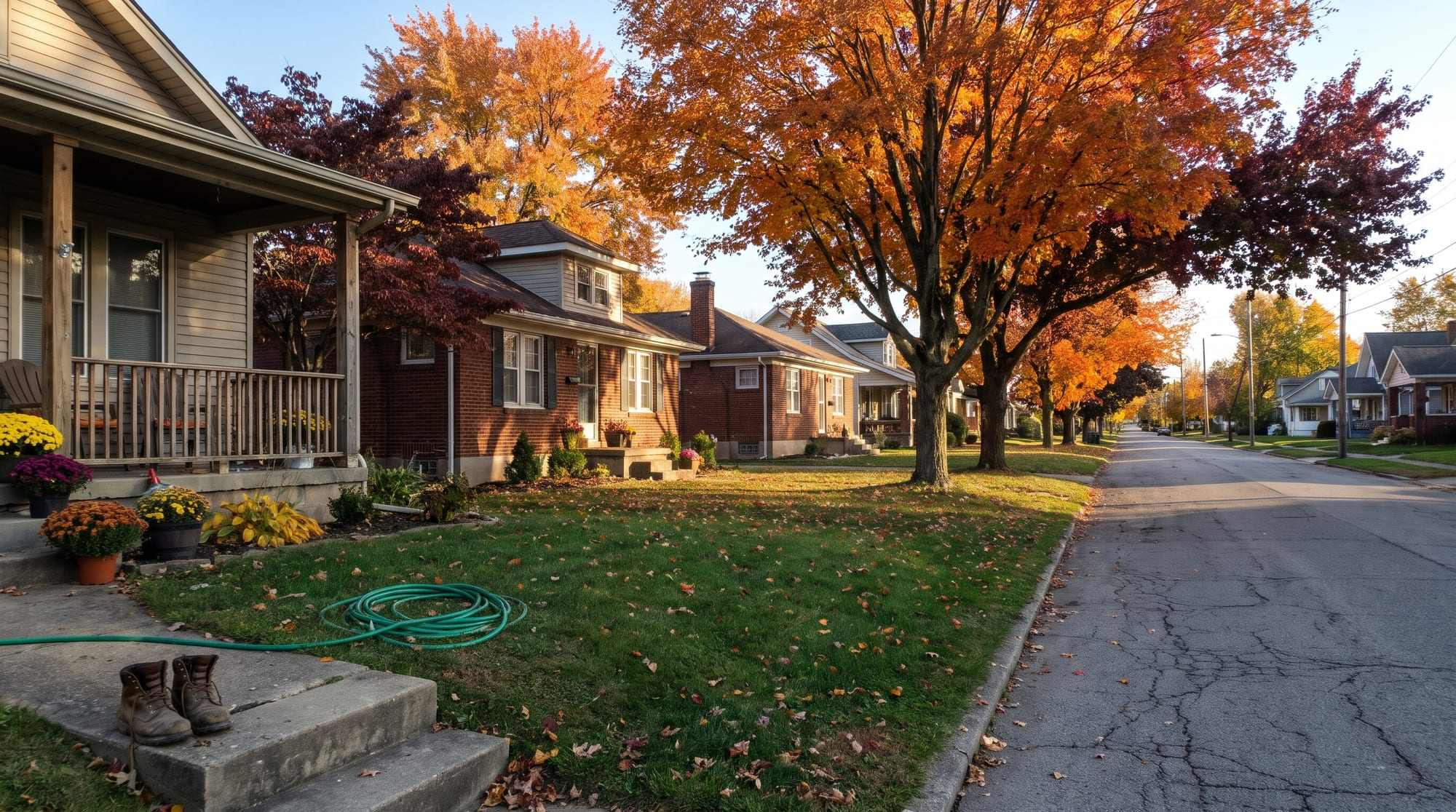
Upper Arlington grew as a planned suburb from the 1920s through the 1960s. The older streets hold Tudor revival and colonial houses; farther out come the mid-century ranches. Few of them are still the size they were built. Additions, finished basements and rebuilt kitchens are common, and each one asks more of a panel sized for a smaller house. We work across both of the city’s ZIP codes, 43221 and 43220.
Tudors, Colonials and Ranches Compared
The age of a house says a lot about what is behind its walls. These are patterns, not a diagnosis: a house that has already been rewired or upgraded may look nothing like its era.
| House | Often behind the walls | What it tends to need |
|---|---|---|
| Tudor revival or colonial, 1920s–30s | Pieces of knob-and-tube or early cable behind plaster, and a service usually upgraded at least once | Old runs replaced, grounded outlets and a panel with room for new circuits |
| Ranch, 1950s–60s | A 100-amp panel, some two-prong outlets and an attached garage | More capacity before central air, a heat pump or a car charger goes in |
| Added onto or rebuilt inside | New wiring tied into an older service, sometimes over several remodels | A load calculation, new circuits and often a larger panel or a subpanel |
The pattern that matters most is the mismatch. A 1930s house with a new kitchen has two wiring systems side by side: the new one, built to current code with GFCI and AFCI protection, and the old one, which is usually the first to give trouble. A dead outlet in an upstairs bedroom of a remodeled house often traces back to an old splice rather than to anything new.
Kitchens and Additions on a Mid-Century Panel
A rebuilt kitchen is where an older panel tends to run out of room. Today’s code wants at least two 20-amp circuits for the counter outlets. The dishwasher, disposal and microwave usually get circuits of their own, and an electric or induction range takes a 240-volt circuit. Add a primary suite or a heated sunroom and the total climbs again.
A load calculation adds up what the house will draw once the work is done. If the service can carry it, the new circuits go into the existing panel or a subpanel beside it. If not, the panel upgrade comes first, so the kitchen is not wired twice. Some ranches of this era still have a Federal Pacific or Zinsco panel, both known for breaker problems, and those are worth replacing whatever the kitchen plans.
Upper Arlington runs its own building department, so the permit and inspection for a panel change or new circuits come from the city rather than from Columbus.
Room on the Panel for a Car Charger
An attached garage makes a home EV charger simple in principle. A Level 2 charger runs on 240 volts on a dedicated circuit, commonly a 40- to 60-amp breaker for a 32- to 48-amp charger, either wired in directly or plugged into a NEMA 14-50 outlet. On a 100-amp service that already carries central air and an electric dryer, that circuit may not fit without an upgrade. The load calculation decides.
A detached garage needs a feed from the house, buried or overhead, and a charger mounted outdoors needs outdoor-rated equipment. Planning the charger alongside any kitchen or addition work means the panel is opened once, for both.
Upper Arlington is part of the area we cover, along with Columbus, Bexley, Grandview Heights and Worthington.