
Electrical Work for Columbus Homeowners
Plenty of Columbus houses were wired long before anyone plugged in a window air conditioner, let alone a car. A brick cottage in German Village or a 1920s bungalow in Clintonville may still run on a fuse box, cloth-covered cable and a few two-prong outlets. That wiring works, up to a point. A remodel, a heat pump or one more space heater pushes it past that point.
We work for homeowners and for landlords with rental properties, on jobs of every size: a dead outlet in the hall, a new circuit for a basement workshop, a full panel change. If a circuit is acting up or the house needs more capacity, call and we will take a look.
Home Projects and the Reasons Behind Them
Panel upgrades are most of our work, and they often come first, because a full or undersized panel holds up every other project. The rest usually starts in one of three ways: something stopped working, a room never had enough outlets, or a remodel or a new car needs circuits of its own.
| Project | Typical reason | Related page |
|---|---|---|
| Panel upgrade | A fuse box or a 100-amp panel now asked to carry central air, an electric dryer and a newer kitchen | Panel Upgrades |
| Breaker or outlet repair | A breaker that trips when the microwave and toaster run together, or a run of outlets that went dead at once | Rewiring & Repair |
| Partial or full rewire | Knob-and-tube, cloth-covered cable or two-prong outlets with no ground behind them | Rewiring & Repair |
| EV charger circuit | A new electric car that needs a 240-volt circuit in the garage or by the driveway | EV Chargers |
| Recessed lights or a ceiling fan | A dark room, or a fan going up where only a light box was | Everyday Work |
| GFCI and surge protection | A bathroom, kitchen counter or garage without GFCI outlets, or electronics lost to a storm | Protection Options |
| Smoke detector wiring | Battery-only alarms, or a new bedroom or remodel that calls for hardwired ones | Everyday Work |
| Generator hookup | A house that loses power in summer storms or a winter ice storm | Seasonal Guide |
Small Upgrades That Make a House Safer
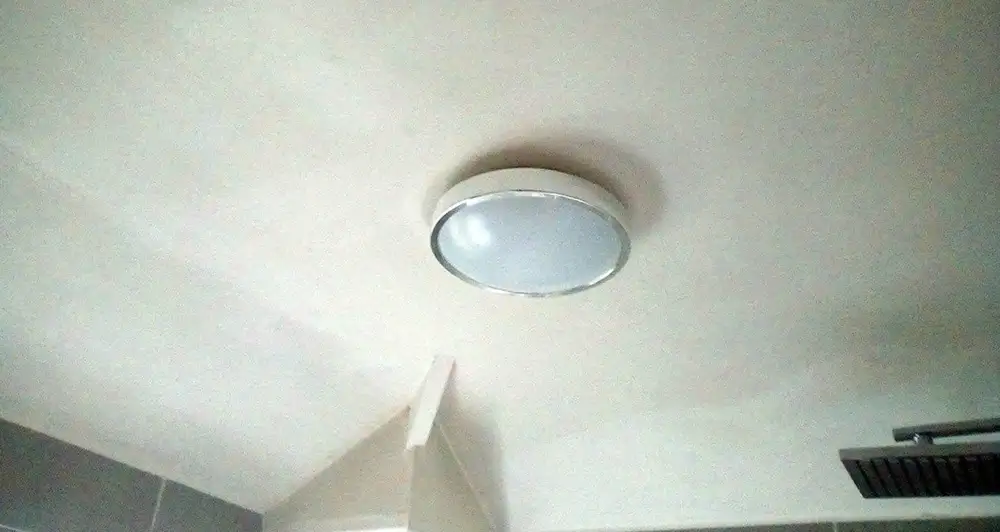
Bathrooms come first. Water and electricity meet there, so the outlets need GFCI protection, which cuts the power in a fraction of a second when current leaks where it should not. A light over a tub or shower needs a fixture rated for damp or wet locations. Many older bathrooms have neither. The fix is usually small: a GFCI outlet or breaker and a fixture with the right rating.
Elsewhere in the house, each of these closes a known weak spot:
- GFCI protection at kitchen counters, in the garage, outdoors, in the laundry and in an unfinished basement, wherever water or damp concrete sits near an outlet.
- AFCI protection on bedroom and living-area circuits. An AFCI breaker shuts off when it senses the sparking of a loose connection or a damaged cord.
- Hardwired, interconnected smoke alarms, so an alarm in the basement sounds in the bedrooms too.
- A whole-house surge protector at the panel, which limits the voltage spikes that lightning and utility switching send into the house.
- Grounded outlets in place of two-prong ones. Where a ground wire cannot be run, a GFCI outlet marked “No Equipment Ground” is the fallback the electrical code allows.
- Protection OptionsWhich circuits need GFCI, AFCI or surge protection, and why.
- Seasonal GuideWhat storms, summer heat and winter cold ask of a home’s wiring.
Rental Houses and Doubles Between Tenants
A rental needs the same electrical care as the house you live in, with two differences: someone else lives there, and problems tend to surface between tenants. A turnover is the time to replace cracked or painted-over outlets, put back missing cover plates, test every GFCI and replace smoke alarms more than ten years old.
Columbus has plenty of doubles, the side-by-side two-family houses of its older neighborhoods. Each side usually has its own meter and panel, and the wiring has often been patched by several owners. When one side needs a panel upgrade, look at both, since they may share the service coming in from the street. Tenants need notice before the power goes off, and someone has to let the electrician in. Larger buildings with more units fall under our commercial work.
Notes That Make the First Call Shorter
Each of these brings the quote closer to the real job, and Frank’s first questions on a call cover the same ground. Add what you can to a Get a Quote request, or keep it at hand when you call.
- What stopped working, or what you want added, room by room.
- When it started, and whether a breaker tripped or a fuse blew.
- Anything that smells hot, buzzes or feels warm. If so, call rather than write.
- The panel’s brand and amp rating, from the label inside the panel door or the number on the main breaker. Open only the door: the inner cover stays on.
- A photo or two: the panel with its door open, the outlet or fixture in question, the spot for a new charger or light.
- The age of the house, and any remodel or electrical work you know of.
- For a rental: who lives there, how to reach them and who has a key.
Order, Power and Permits for a Home Project
In a house people live in, the planning is about order, power and paperwork. A load calculation adds up what the house will draw once a planned kitchen, a car charger or a heat pump is in, so the panel is sized once and the walls are opened once.
What should be fixed first in an older house?
Anything that is a hazard now: a warm outlet, a burning smell, a breaker that will not reset, scorched or brittle wire. Capacity comes next. If the house runs on a fuse box, or on a 100-amp panel with no empty spaces, and new loads are on the way, settle the panel upgrade before adding circuits, so nothing is wired twice. Fixtures and finishes come last.
Can we stay in the house while the work is done?
Usually, yes. Most repairs need only one circuit off, for part of the visit. A panel change is different: the whole house is without power for several hours, often most of a day. Think about the refrigerator, a home office, a sump pump and any medical equipment, and mention them when you request the work so the shutoff can be timed around them.
What turns up once the walls of an old house are open?
Knob-and-tube wiring in houses built before about 1940, cloth-covered cable from the 1940s and 1950s, splices made with no box around them, and grounding that has worn or was never connected. Plaster walls take more care: new cable is fished from the attic and the basement, with small openings only where they cannot be avoided. Each find is explained before any repair begins.
Does my project need a permit?
Panel changes, new circuits and EV charger circuits normally need a permit and an inspection from the city where the house stands. Columbus, Bexley, Grandview Heights, Upper Arlington and Worthington each run their own building department. A service change also needs the power company to disconnect and reconnect the house. Replacing a worn outlet or switch with the same kind often needs neither, but the city’s rules decide, so ask when you request a quote.
Fixtures and Fans on the Boxes They Need
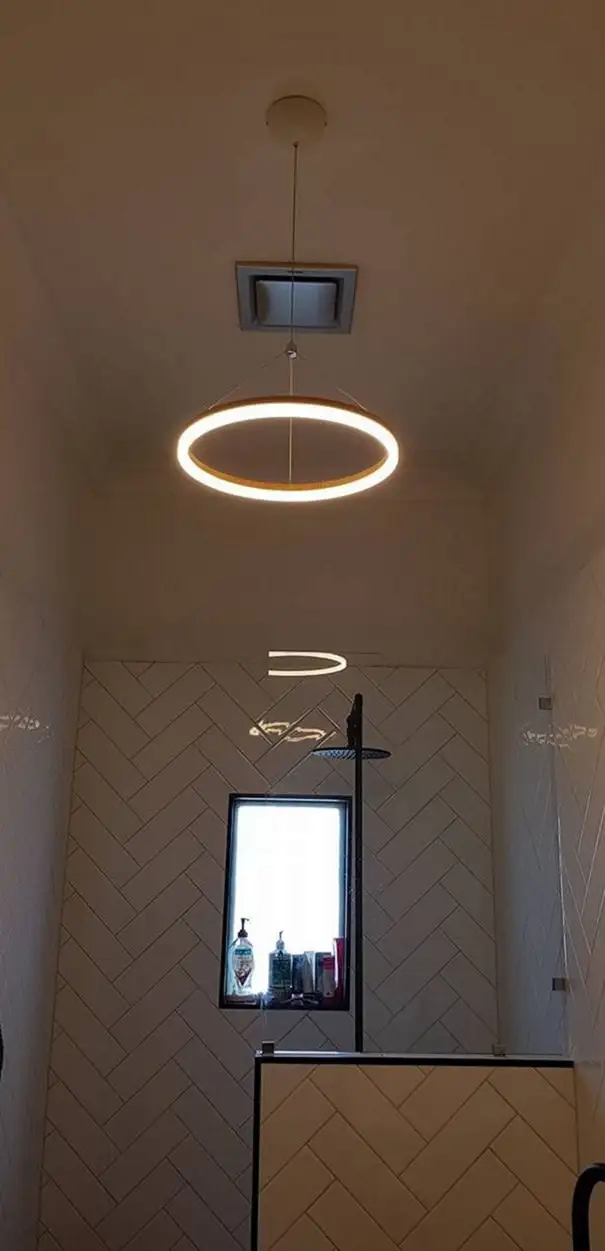
A new light or fan is only as solid as the box it hangs from. A ceiling fan swings and pulls in ways a light never does, so it needs a fan-rated box or a brace fixed between the joists. A fan screwed to an old light box works loose over time. Heavy pendants and chandeliers need the same attention: a box and a mounting rated for the weight they carry.
Recessed lighting has its own choices. Slim LED wafer lights fit shallow ceilings that could never take an old can. In a ceiling below an attic, every fixture needs an IC rating, which means it is safe in contact with insulation. Dimmers have to suit the LED fixtures they run, or the lights flicker and hum. Spacing, switching and the circuit are planned together, so the room is lit evenly and nothing overloads.
Called for two small things, a ceiling fan install in the bedroom and a dead outlet in the hall. Once he got into the ceiling box it wasn't rated for a fan, so he had to put in a proper brace box, and the outlet had a backstabbed wire that burned through…
Ask About Work on Your House or Rental
Send the details with a quote request, or call and describe what the house is doing. Small repairs are as welcome as panel changes.