
How We Work on Electrical Jobs
Electrical problems hide. A dead bedroom outlet can start with a loose wire two rooms away, and a breaker that trips every evening can trace back to a tired splice in the attic. Polaris Electric works through a job in a set order, so the repair lands on the cause rather than the symptom.
The details differ between a dead outlet and a full panel change. The stages don’t: assessment, options, the work and testing. Frank Holcomb, the owner, takes on small repairs as readily as larger jobs, and both follow the same order.
Assessment: The Phone Call and the Panel Check
When a call comes in, Frank starts with four questions.
What Frank Asks When You Call
- What stopped working?
- When did it happen?
- Did a breaker trip?
- Does anything smell hot or feel warm?
The answers sort the urgent from the routine. A warm switch plate means switching that circuit off at the panel until it is checked, and smoke or a burning smell means leaving the house and calling 911. A circuit that died after a storm points one way. A breaker that trips whenever the microwave and the toaster run together points another.
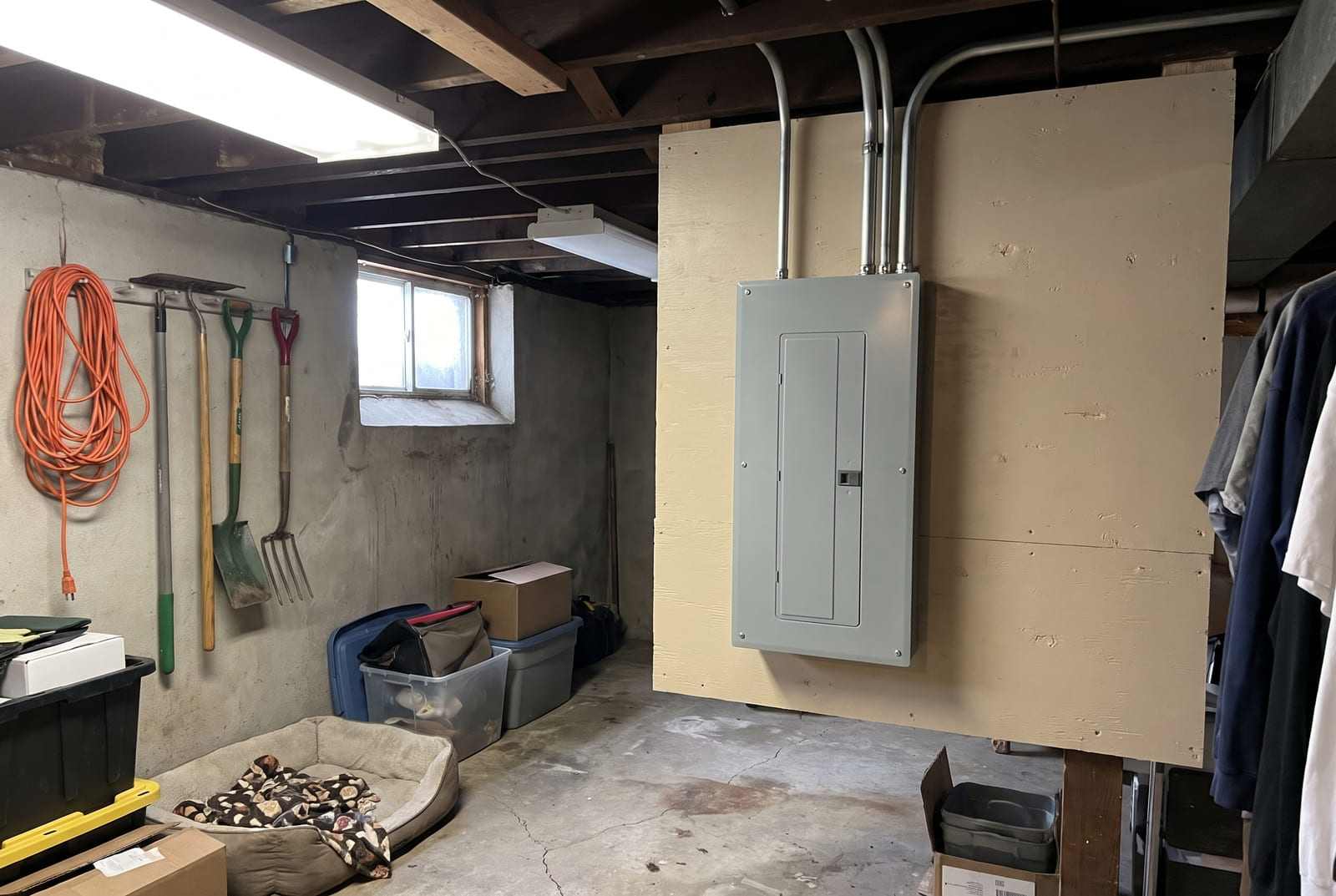
On site, he checks the panel first. It shows which breakers have tripped, whether any are scorched or loose, and whether the panel itself is part of the problem: a fuse box, an overfilled 100-amp panel, or a brand with known breaker trouble. Then he traces the problem back from the dead outlet or fixture, box by box along the circuit, until the fault turns up.
Options: What Was Found and the Choices That Follow
Before any repair begins, Frank explains what he found. That might be a burned wire end, an outlet whose wires were pushed into backstab holes instead of fastened under its screws, a breaker that no longer holds, or a panel with no room left for another circuit.
Most problems have more than one sensible fix. A loose neutral can be tightened in place. A kitchen circuit that trips under load may need a second circuit, not a bigger breaker. A fuse box can be replaced now, or the worst circuits fixed first and a panel upgrade planned for later. Larger jobs, such as a panel change or an EV charger circuit, also bring a load calculation, a permit and, for a service change, the utility.
Older houses add choices of their own. Opening a panel or a wall in a Victorian Village or Clintonville house often turns up worn grounding and old splices, and those can be fixed in the same job or planned as a job of their own.
The Work: Circuits Off and Tested Dead
Electrical repairs are normally made with the circuit switched off at the panel and checked dead with a tester before anyone touches a wire. A service change goes further: the utility disconnects the house at the meter and reconnects it once the new equipment passes inspection.
Sound electrical work looks unremarkable. Wires are fastened under screws or joined with rated connectors, splices sit inside covered boxes, cable is secured and protected where it runs, each breaker matches the wire it feeds, and the panel directory says what each breaker controls. Aluminum branch wiring from the late 1960s and early 1970s takes connectors rated for it, never ordinary wire nuts.
Testing: Proving the Fix Before the Job Ends
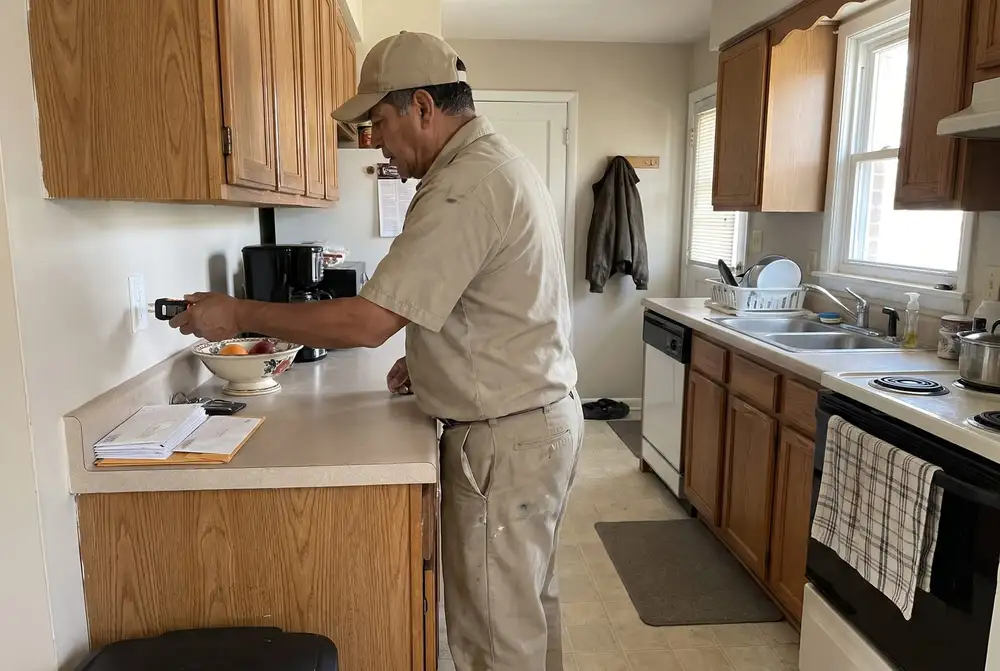
Finished electrical work is normally tested before it goes back into daily use. A plug-in tester confirms that each outlet is wired correctly and grounded. GFCI and AFCI devices get their test buttons pressed. The circuit runs under a real load, so the breaker can show that it holds.
Where the job had a permit, an inspector from the city’s building department checks the work as well. New wiring is usually inspected before the walls close, and again once the job is finished.
Polaris is who I call now after a few jobs around the house. Latest was a bathroom fan that just hummed and wouldn't spin. The tech swapped the motor and checked the wiring so I knew it wasn't something bigger…
What Happens at Each Stage, and Your Part in It
Each stage has something you can do to help it along.
| Stage | What generally happens | What you can do |
|---|---|---|
| Assessment | Questions by phone; on site, the panel first, then a trace back from the dead outlet or fixture | Note what stopped working and when, and whether a breaker tripped; clear a path to the panel |
| Options | Frank explains what he found and the choices it leaves, before any repair begins | Ask what can wait, what doing it all at once would involve, and whether a permit applies |
| The work | Circuits switched off and tested dead, then repairs to connections, devices, circuits or the panel | Keep children and pets clear, and expect the circuits involved to be off for a while |
| Testing | Outlets, GFCI and AFCI devices and breakers checked under load; an inspection where there is a permit | Ask which breaker feeds what, and try the new devices yourself |
Safety and Code Rules in Plain Language
Electrical codes exist because electrical mistakes stay hidden until they hurt someone. These rules shape most jobs, small or large.
| Topic | What it means for you |
|---|---|
| Permits and inspections | Panel changes, new circuits and EV charger circuits normally need a permit and an inspection from the city the building is in. Columbus, Bexley, Grandview Heights, Upper Arlington and Worthington each run their own building department. |
| GFCI and AFCI protection | Newer code calls for shock and arc protection near water and on most living-area circuits. Work on an older circuit can bring those rules into play. |
| Grounding and bonding | The ground wire gives a fault a safe path back to the panel, so the breaker trips instead of someone getting a shock. Bonding ties metal pipes and the panel together so they can’t sit at different voltages. Older houses often have worn or missing grounds. |
| Working with the power off | A circuit is switched off at the breaker and tested dead before anyone works on it. A wall switch is not enough: it can leave live wires in the box. |
| Why electrical work is not a DIY job | Mistakes stay hidden for years, then show up as heat, a shock or a fire. Work done without a permit can also cause trouble when the house is sold. |
Does every electrical job need a permit?
No. Replacing a switch, an outlet or a light fixture with the same kind usually doesn’t. New circuits, panel changes, service upgrades and EV charger circuits normally do. Each city sets its own rules, so the answer for a house in Bexley can differ from one a few streets away in Columbus.
What does an electrical inspector check?
That the work meets the code the city has adopted: wire and breaker sizes, grounding and bonding, how many wires share a box, GFCI and AFCI protection, the clear space in front of the panel, and how cable is run and secured.
Is the power off for the whole visit?
Usually not. Most repairs switch off only the circuits involved. A panel change or a service upgrade takes the whole house off while the utility disconnects it at the meter, so keep the refrigerator and the freezer closed during that part of the job.
Is it safe to replace an outlet or a light fixture myself?
The risk is in what you can’t see afterward: a loose neutral, a wire pushed into a backstab hole, a ceiling fan hung on a box not rated for it. Those show up later as heat, flicker or a dead circuit, sometimes years on. Anything inside the panel, any new circuit and any aluminum wiring is a job for an electrician, and a like-for-like swap is safer done by one too.
What helps before the electrician comes?
Clear a path to the panel and to the dead outlets or fixtures, keep pets in another room, and note which breakers you reset and when. If the panel directory is blank or faded, say so, since tracing circuits takes longer without it.
Bring the Problem, Big or Small
Describe what stopped working, or the job you have in mind. Polaris Electric works for homeowners, for landlords with rental properties, and for shops, offices and restaurants.